Death Tarot Card Meaning
Death represents transformation, endings and closure, rebirth. Numbered 13 in the Major Arcana, it signals transformation when upright and warns of resisting change, clinging to the past, stagnation in reverse. In yes-or-no readings, Death leans no.
Death, Card #13 of the Major Arcana, is the moment the old chapter truly closes so a new one can exist at all. It speaks to those times when life doesn’t just tweak the settings, it changes the whole operating system: a job is over, a relationship is done, an identity no longer fits. Something you’ve outgrown is asking to be laid to rest, even if part of you still wants to keep it on life support.
This card isn’t about literal death; it’s about the honest, sometimes brutal clarity that *this phase is finished*. Death invites you to stand in that doorway between “what was” and “what’s next,” to feel whatever grief or relief is there, and to travel lighter into the next season. When you stop trying to resurrect what’s already gone, you free up enormous energy for the person you’re becoming.
Key Themes
Upright
Reversed
Artwork & Symbolism
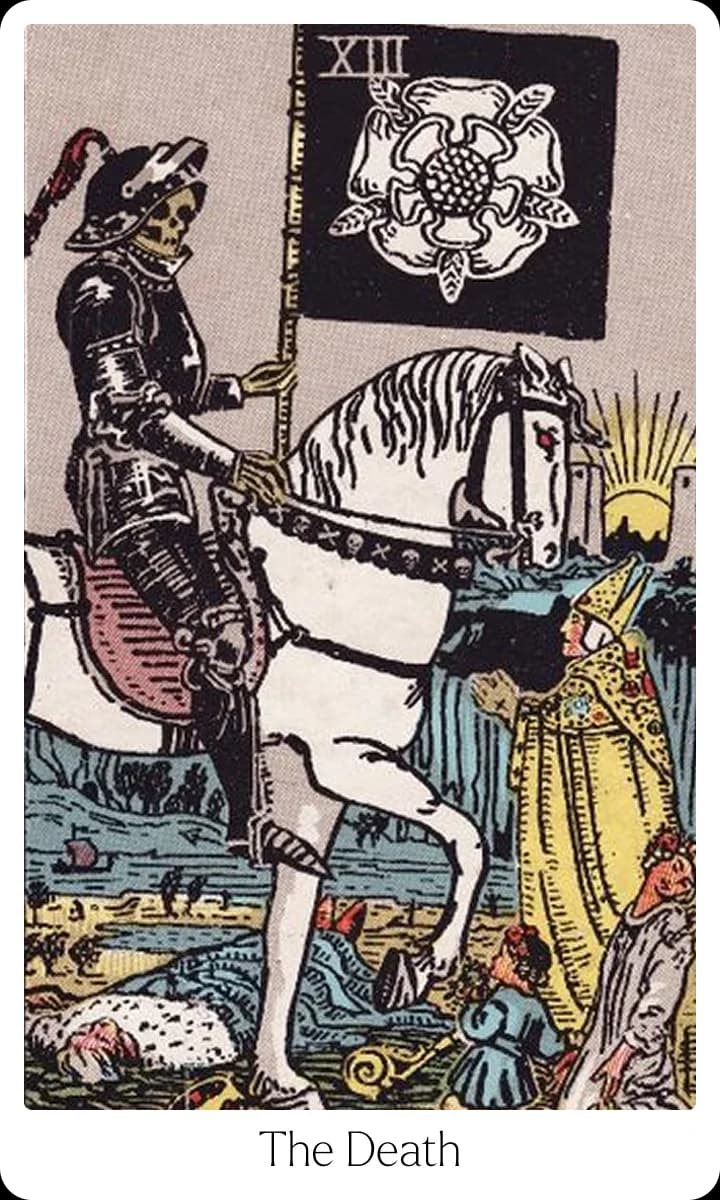
Death rides in on a white horse—clean, unstoppable change—while the skeletal rider’s black armor says this ending is firm, not negotiable. The black flag with the white rose is the key: something pure grows out of what’s been cut down, and XIII reminds you this is a major threshold, not a minor mood. Even the horse’s skull-and-crossbones tack underlines the message: what’s dead weight gets carried away.
Look at the people in the path—every reaction you have is already here. A crowned figure lies under a shroud, showing endings don’t care about status. The bishop kneels in prayer, surrendering control, while the child holds a small plant—new life in your hands if you let go. In the distance, the sun rises between two towers: the next chapter is real, but you have to pass through the gate first.
Death Upright
Upright, Death points to a real ending—one you can’t just ignore or patch over. A cycle, role, or attachment has run its course, and the most loving thing you can do for yourself is to let it be over. This might feel like the ground shifting under your feet, or like that strange quiet after a storm when you realize nothing will go back to exactly how it was.
This card invites you to clear space: to say the hard goodbyes, to donate what you no longer use, to speak the words you’ve been avoiding. Honoring the ending—rather than rushing past it—creates the conditions for genuine rebirth instead of a quick rebound into more of the same.
Death Reversed
Reversed, Death highlights where you’re gripping the past so tightly that your knuckles hurt. You might be replaying old conversations, staying in situations that feel dead inside, or insisting that if you just try harder, things will magically go back to “before.” Underneath that is usually fear: of the unknown, of emptiness, of who you’ll be without this.
This position suggests a kind of emotional limbo, where nothing fully lives or fully dies. The card asks: what are you keeping on life support, and what would happen if you let it go with intention instead of waiting for it to be ripped away? Facing that fear is the first step out of stagnation.
Death in Love
In love, Death often shows up when a relationship pattern is at a point of no return. This could be a breakup, a divorce, or the end of doing things the old way—silent resentment, chasing unavailable people, staying for comfort instead of connection. Even in an ongoing relationship, it can mark the “death” of a dynamic that’s been hurting both of you.
This card invites radical honesty: is this connection evolving with you, or are you trying to squeeze yourself back into who you were at the beginning? Sometimes Death supports a conscious uncoupling; other times it asks both partners to let an old version of the relationship die so something more authentic can be built on the cleared ground.
Death in Career
In career, Death points to major transitions: leaving a job, changing fields, shutting down a project, or realizing that your current path no longer matches who you are. The security of the familiar may be fading, and that can feel scary—even if part of you is deeply relieved.
This card encourages you to treat endings as data, not failure. What has this role, team, or industry taught you, and what are you done tolerating? Letting a misaligned path end frees you to pursue work that actually fits the person you’ve become, rather than the person you were when you started.
Death in Personal Growth
For personal growth, Death is the shedding of an old skin: identities, beliefs, and coping strategies that once protected you but now keep you small. You may notice you no longer resonate with certain roles—people pleaser, overachiever, caretaker, chameleon—and that can feel disorienting, like you don’t quite know who you are without them.
This card invites you to grieve those versions of yourself with tenderness while still releasing them. Growth here isn’t about adding more; it’s about stripping away what’s false so your real desires, values, and voice can finally breathe.
Death as Daily Guidance
Today, Death nudges you to let one thing be *truly* over—an obligation, a habit, a story about yourself—so you can reclaim that energy for what’s next. Notice where you’re forcing life into something that’s already finished, and practice a small, deliberate act of release.
Death — Yes or No?
Is Death a yes or no card? Death is generally a no card. Death usually signals an ending or redirection rather than continuation, so the answer leans no—but it opens the door for a better-aligned option to emerge once this chapter closes.
Death as Feelings
As feelings, Death is the emotional sensation of a door closing behind you: grief, relief, numbness, and a strange quiet all tangled together. It can show someone realizing, deep down, that there’s no going back—they may feel done, emptied out, or suddenly clear that “this is over,” even if they haven’t said it aloud yet. There’s a bittersweet sense of standing on the edge of an unknown future, mourning what’s lost while sensing that something new is waiting beyond the horizon.
Death as a Person
As a person, Death describes someone who is a catalyst for change—intense, honest, and unafraid to call time of death on things that aren’t working. They might be the friend who tells you it’s really time to leave that job or relationship, or the one who periodically burns their life down to rebuild it more authentically. At their best they’re deeply transformative and liberating; at their worst they can be abrupt, severe, or uncomfortable to be around because they refuse to pretend everything is fine when it isn’t.
How Different Decks Interpret Death
Each tarot deck brings its own artistic voice and interpretive lens. Here's how 3 artists from Flickerdeck approach this card.
Mystic Fair -Tarot
by Merve Yumak
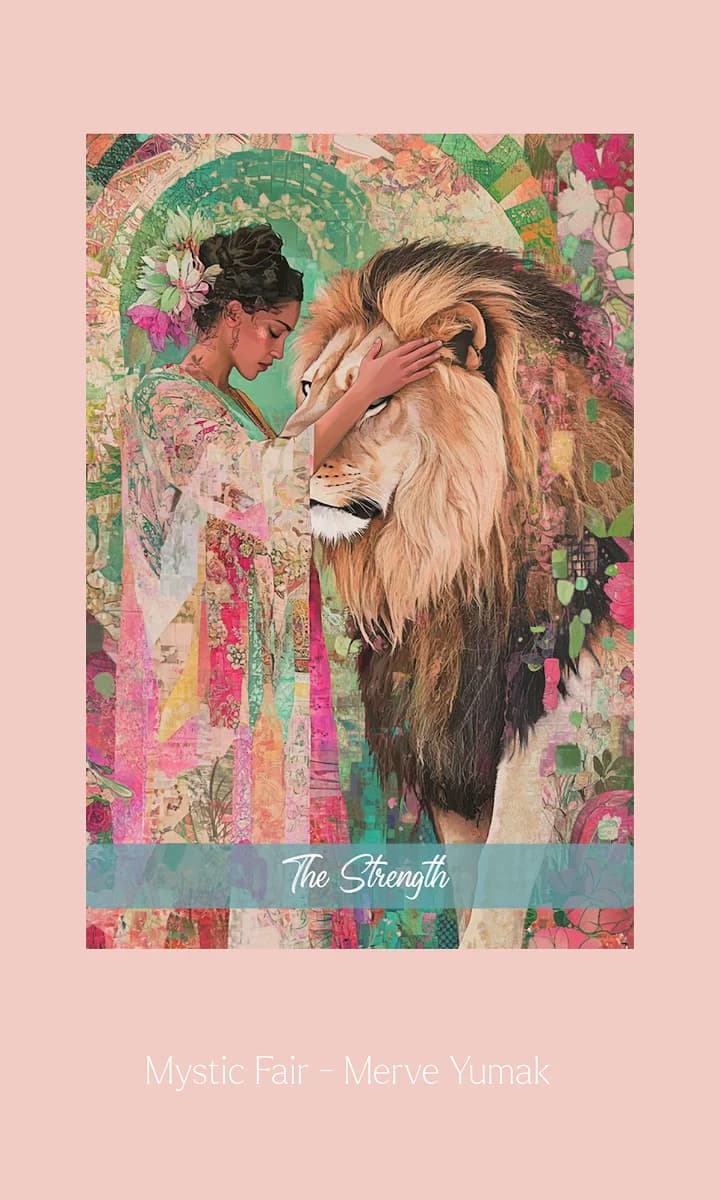
Where universal meanings often emphasize stark endings and the finality of a closed chapter, this deck leans into Death as a tender, cyclical transformation—focusing on spiritual renewal, surrender, and the quiet miracle of rebirth rather than the drama of loss itself.
Solar Logos tarot
by Keri Bevan
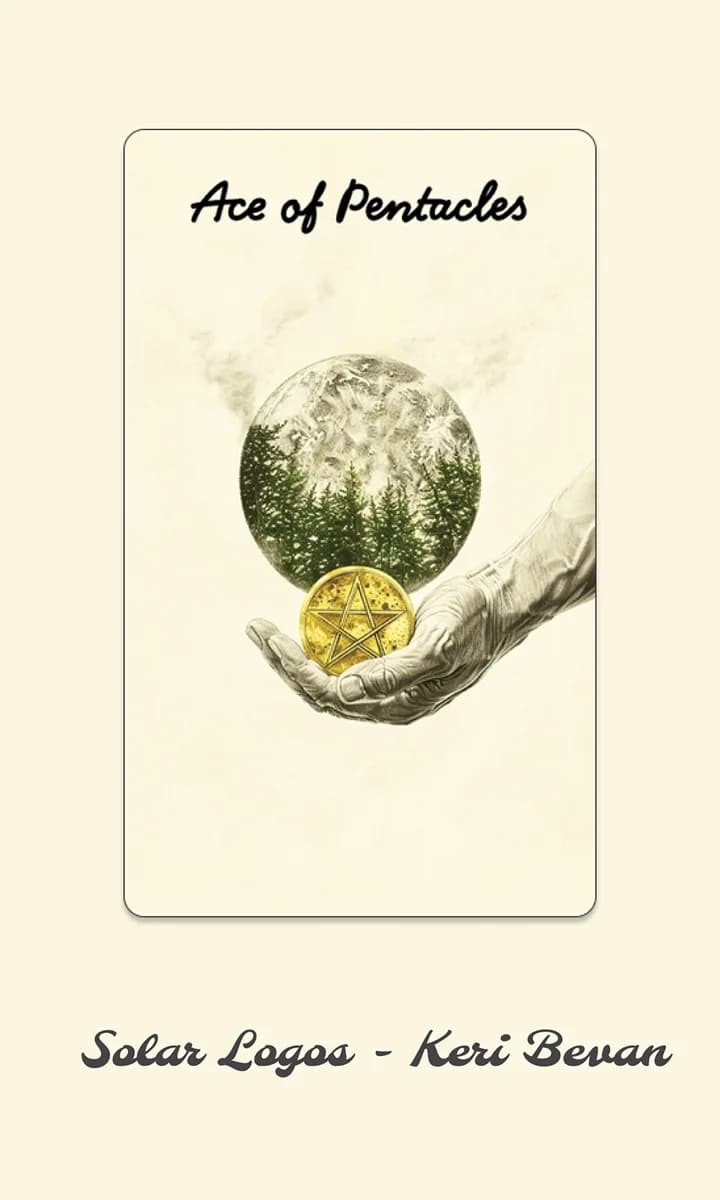
While the universal meaning centers on closure and the finality of an ending, this deck leans into Death as an already-awakening metamorphosis—less about loss itself and more about the sacred, upward movement of your evolving self once you find the courage to cross the threshold.
Boring Tarot
by Art: Dasha Zeleno Curator: Iurii Nazarenco
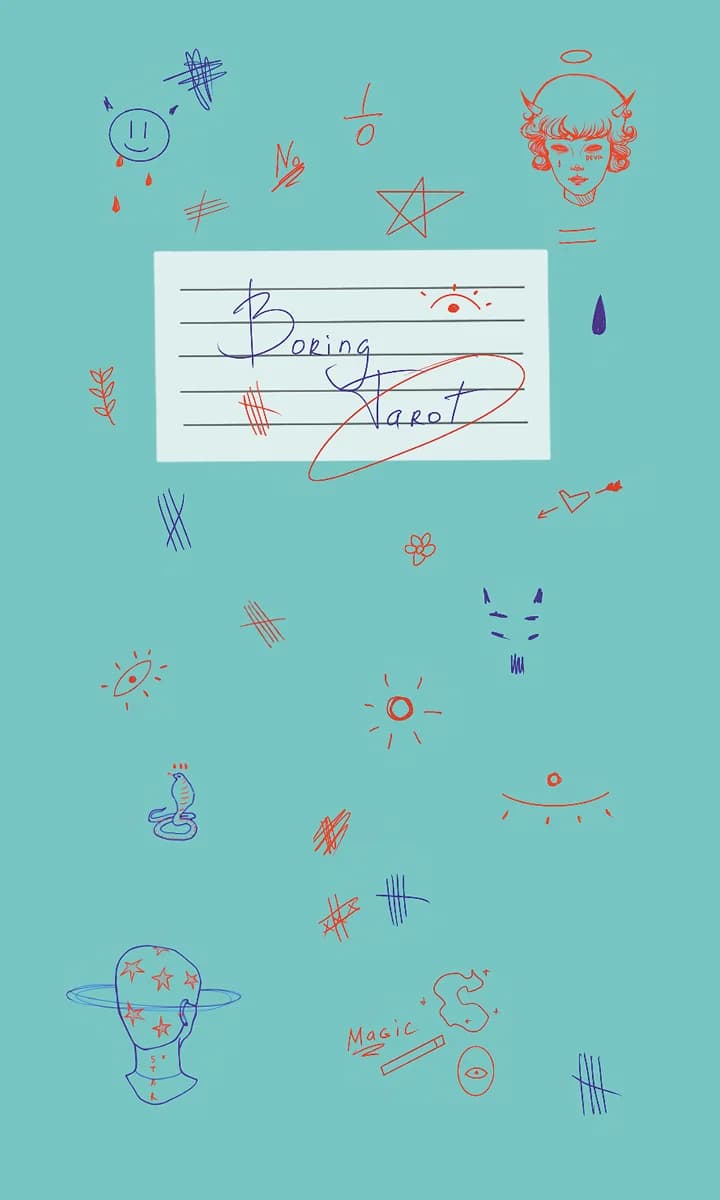
Instead of romanticizing transformation, this deck leans hard into the anger, emptiness, and identity void of endings, calling out how you keep doing the same stale moves even while everything else has already changed.
Death in a Reading
In a reading, Death highlights the parts of your life that are at a natural stopping point, even if your mind hasn’t caught up yet. In a past position, it can point to a major ending that still shapes how you move now. In a present spot, it suggests you’re in the thick of a transition where old structures are falling away. In a future or outcome position, it invites you to prepare emotionally and practically for a chapter to close so a more aligned one can begin.
When paired with challenging cards like the Ten of Swords or Three of Swords, Death can amplify themes of loss and the need for real grieving. With cards like the Star or Ace of Cups, it underscores the promise of renewal that follows the clearing. Wherever it lands, this card asks you not to rush past the ending, but to let it teach you what you’re truly ready to outgrow.
Frequently Asked Questions
Is Death a yes or no card?
What does Death mean in love?
What does Death mean for career?
What does Death represent as feelings?
What does Death reversed mean?
Experience Death through Mystic Fair -Tarot's unique voice in Flickerdeck
Discover tarot through dozens of artistic lenses — do readings, explore decks, and find the interpretation that resonates with you.
Get Flickerdeck